At The Bee Farm

Sunday
Sep112011

TomatoFest Time at the Bee Farm

3 years ago our friend Damien Casten of Candid Wines thought up the idea of TomatoFest.  With Slow Food Chicago as a sponsor, heirloom tomato seedlings are sold to the public to raise money for urban agriculture projects in Chicago.  Once the tomatoes are all grown up, those who bought seedlings are invited to show off their tomatoes at Tomatofest. 

This year proceeds from TomatoFest will go to the preSERVE garden at 12th place and Central Park Ave in Chicago.  The preSERVE garden is planted with crowder peas, black eyed peas and sweet potatoes.  Chicago Honey Co-op is happy to be a partner in this effort along with the North Lawndale Greening Committee, Slow Food Chicago and NeighborSpace.

So come on out and celebrate tomatoes with us on September 24th at 5PM.  Bring along a potluck dish and a chair to sit on.  Beer, wine and soft drinks will be provided. Tickets are only $15.  To buy tickets, get more details and directions, visit Slow Food Chicago.


Monday
Sep052011

Record Keeping at the Bee Farm

Thursday
Jun162011

Sweet Summer Solstice 2011

Come on out and visit us on Friday June 24th for the most affordable fundraiser in Chicago. For $15 and a potluck dish to share, you get to party outdoors on one of the longest evenings of the year at our apiary on Fillmore St.

If you have never visited our apiary, this year is the year to come out to the Solstice potluck. The food is always excellent, there is plenty of beer and wine and the apiary is pretty spectacular.

Slow Food Chicago has sponsored and coordinated this event for us for the last 3 years and everyone who comes has a great time. You can buy tickets and get details on the Slow Food Chicago website.

If you take a look at the satellite map, you can see how large the space is. Plenty of room for a big party!

We will be giving tours of the beehives and community farm and will have honey, candles and more for sale.

Hope to see you there!


Thursday
May192011

Live Bees Rush!


5 Queens delivered from Southern Illinois today. Priority small flat rate boxes are perfect for this. The black cap on the end of the queen cage holds sugar candy for the bees to eat.


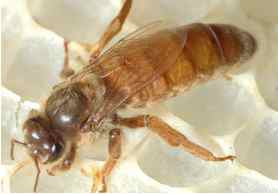
The Queen is on the right. She is marked with a white dot and shipped with four attendants who take care of her during the trip. The dot will make it a little easier to find her inside the hive.


Live bees attract attention.

Wednesday
Mar022011

Essential Equipment for New Beekeepers Part Two

After the hive is set up a beekeeper will need a few tools and bits of clothing in order to manage the hive.


1. Hive Tool: It would be impossible to inspect a beehive without a hive tool. That is the beekeeper name for a pry bar. It is used to open and inspect hives, and scrape wax and propolis out of the hive. It can be an emergency hammer, scrape bee stingers off skin and pull nails. You can’t keep bees without one.

2. Smoker: It is a misnomer to say that using smoke “calms” the bees. That isn’t what happens. The smoke distracts the bees, allowing the beekeeper to make an inspection or harvest frames of honey. It is basically a metal can with a bellows and a spout attached to it. Beekeepers get to start a fire inside it, close the lid  and then use the smoke to manage the bees.

3. Gloves: Not all beekeepers use gloves but since that is where a beekeeper is most likely to get stung, it might pay to wear some. There are different kinds made with different materials but any good fitting sturdy pair of gloves will work.

4. Hat and Veil: More important than gloves is a  hat and veil. A veil is just a mesh screen that keeps the bees away from your head. You may be tempted on a sunny day when the bees are busy, to work your hive without a veil. That is the day a guard bee will go right for your face.

5. Frame spacer: This tool makes it easy to properly space the frames of honey or brood inside the hive. Proper spacing is very important because if frames are placed to close together or far apart, the bees will either close the gap or build more comb in between the frames. While this is perfectly logical from a bee’s perspective,  it makes working a hive more time consuming and messy for the beekeeper.

6. Bee brush: This brush has long soft bristles and is used when a beekeeper is harvesting frames of honey. A frame of honey is pulled up out of the hive and the bees are gently brushed off, back into the hive, Then the beekeeper quickly hides the frame of honey in a separate box with a lid so the bees can’t get at it again.

7. Feeder: When a new package of bees is installed, they go into an empty hive with no food. A feeder is used to supply sugar syrup until there is enough natural forage for the bees to bring back to the hive to make into honey.

8. Beekeeping book or Beekeeper:  Everyone starting out in beekeeping needs a good source of information. Beekeeping is fascinating but can be very confusing almost all the time.
A good book or experienced beekeeper are invaluable.